

Edible science projects are a great avenue for kids (or even adults) to explore science experiments safely. Learning key concepts is so much better when you get to eat the fruits of your labor!
Candy Science Experiments
These science projects are meant to be eaten. For the most part, they involve chemical reactions.

- Sugar
- Baking soda
- Citric acid
- Corn syrup or honey
- Water
Baking soda (a base) reacts with citric acid (an acid), producing carbon dioxide bubbles that the candy coating traps. Saliva dissolves the candy, releasing the gas with a cracking sound. It’s a fun candy recipe that works because of chemistry.

- Baking soda
- Citric acid
- Powdered sugar
- Gelatin
Fizzy sherbet is a candy, as opposed to American sherbet, which is more like ice cream. Baking soda and citric acid provide the fizz, just like in the Pop Rocks recipe, except you simply mix ingredients rather than cook them into a hard confection.

- Ingredients depend on the recipe
There are several methods of making slime you can eat. The version that mixes water, psyllium husk, and sugar forms a translucent slime. Meanwhile, combining marshmallows, corn starch, and cooking oil gives you an opaque slime. Choose your adventure.

- Juice, soda, or a soft drink
- Baggie containing ice and salt
This project demonstrates how phase changes of matter absorb or release energy. In this case, ice absorbs energy from its surroundings as it melts into water. Salt keeps this water from refreezing back into ice because of freezing point depression. But, there is enough heat absorbed from the environment that it turns a regular drink into a slushy partially-frozen one.

- Half-and-half or cream
- Sugar
- Vanilla
- Salt
- Ice
Similarly, the salt and ice “trick” also freezes an ice cream recipe. You don’t even need a freezer. If that is not cold enough for you, try one of the science ice cream recipes using dry ice or liquid nitrogen!
Crystal-Growing Edible Science Projects
Crystals are purified molecules and compounds, so there are not very many of them that are actually edible. Your best bet is crystallizing sugar from something sweet, like sugar solution, maple syrup, corn syrup, or honey. Salt is also edible, although probably not that tasty. In all cases, eat the results of these projects in moderation.

- Sugar
- Water
- Stick or a cotton string
Unlike most crystals, sugar takes up food coloring and flavoring. This is the classic edible science project for kids!
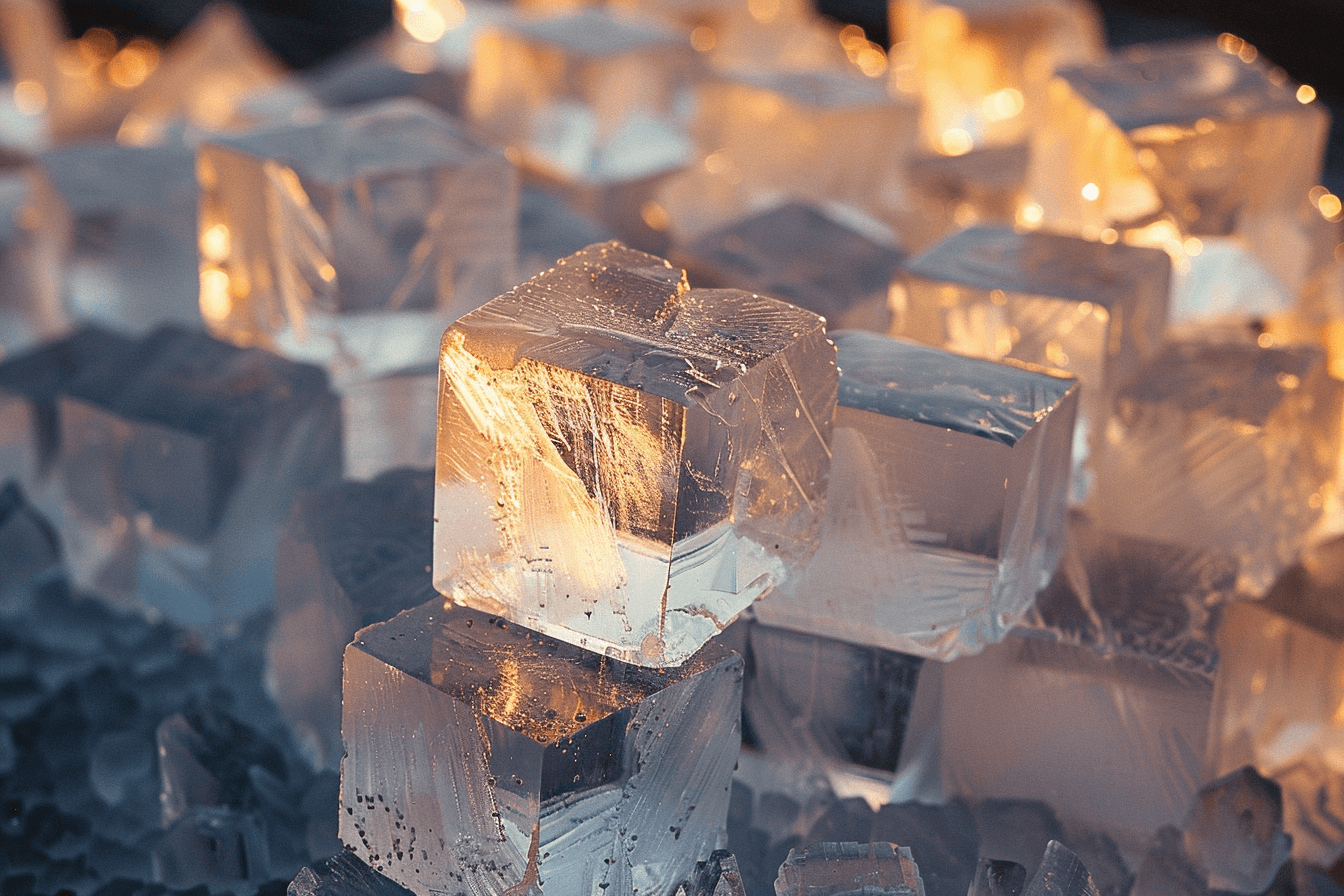
- Salt (any table salt, including sea salt, kosher, iodized, rock salt, etc.)
- Water
Salt grows beautiful clear cubic crystals. Growing large crystals takes some time, but smaller ones grow quickly.

- Maple syrup
While sugar crystals are naturally colorless, maple syrup crystals often retains an amber hue. If you don’t have any maple syrup, try regular pancake syrup, honey, corn syrup, or molasses. Compare the crystals you get.
Edible Color Change Science Projects
Most edible color-change projects rely on pH indicators. These are compounds that display different colors depending on how acidic or alkaline conditions are. Red cabbage juice is a well-known edible (if not yummy) pH indicator, but many fruits juices also change colors, too.

- Butterfly pea flowers (available from Amazon or as a tea in grocery stores)
- Any drink that is nearly colorless
First, you steep the butterfly pea flowers in a bit of hot water and extract their color. Then, you add this nearly flavorless coloring to your beverage. At neutral pH, the color is blue. Under acidic conditions, you get pink. Purple represents an intermediate pH. Add lemon juice and increase acidity. A tiny bit of baking soda decreases acidity. The project shows how you get all three colors in a homemade lemonade drink.

- Sugar
- Hot water
- Food coloring
In this project, you control the colors by adding food coloring to different mixtures of sugar and water. The solution with the most sugar is the most dense and sits at the bottom of a container. Pure water with food coloring is the least dense and is at the top. Make as many other colored solution between these two layers for a rainbow density column. Technically, it’s an edible science project, but very, very sweet.
Science Projects With Edible Ingredients
You don’t want to eat these projects, but you can indulge in the extra supplies that you don’t use.

- Colored candies
- Water
- Coffee filters
Explore the different pigments in candies using paper chromatography. The different molecules move through a filter at varying rates due to their sizes and other properties. It’s also a fun introduction to color theory. Hint: Purple candies contain multiple dyes to get their color.

- Small soft candies
- Toothpicks or licorice ropes
Assign bases to candy colors and match them up into base pairs. Connect them to each other using licorice, toothpicks, or honey.